5 Tennis Drills You Can Practice Alone (and When to Get a Coach)
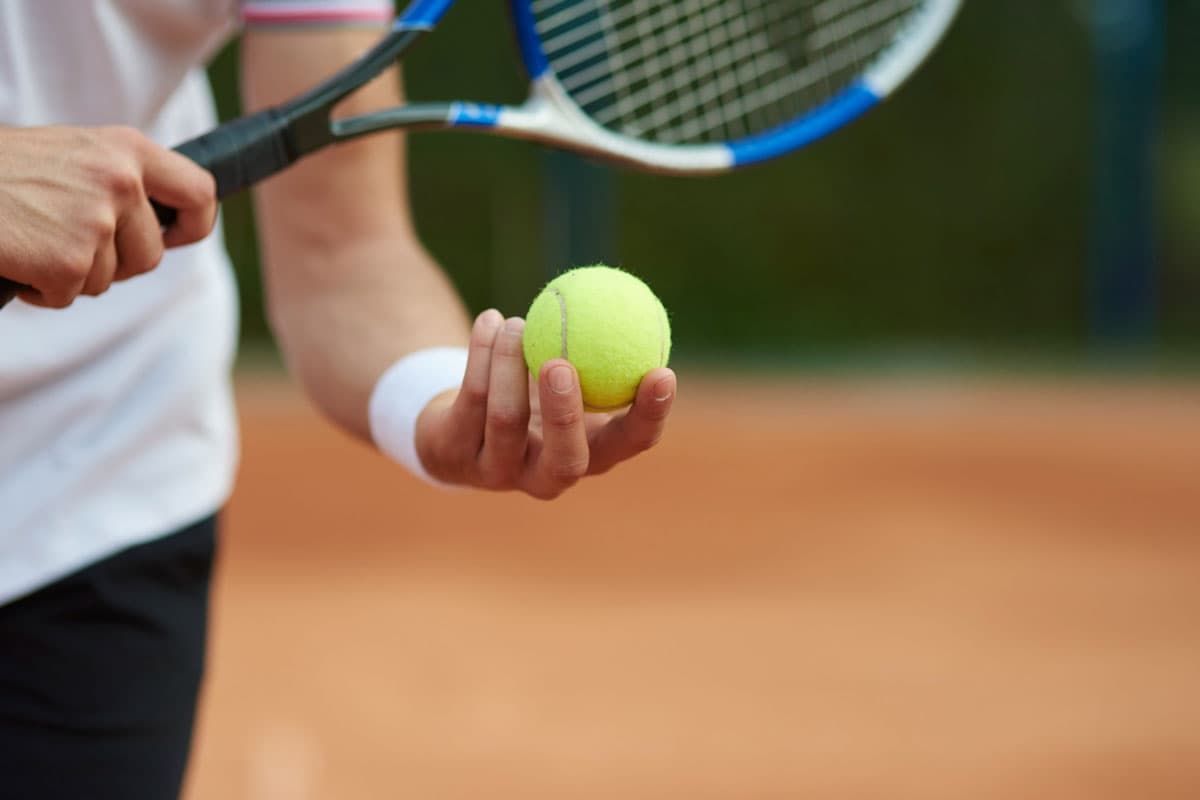
You do not need a hitting partner to improve your tennis game. Some of the most effective practice you can do is solo work — building muscle memory, refining footwork, and developing consistency without the pressure of a live ball. The key is knowing which drills actually transfer to match play.
Here are five proven solo drills, plus honest guidance on when self-practice is not enough and a coach becomes the smarter investment.
Drill 1: Wall Rally — Forehand and Backhand
What It Builds
Consistency, timing, stroke mechanics, and the ability to handle pace. The wall is the most underrated practice partner in tennis.
How to Do It
Stand 15 to 20 feet from a flat wall. Hit the ball against the wall using your forehand, letting it bounce once before each hit. Aim for a consistent target area on the wall (roughly net height, about 3 feet up). Once you can sustain 20 consecutive forehands, switch to your backhand. Then alternate: forehand, backhand, forehand, backhand.
Reps and Sets
Start with 3 sets of 2-minute rallies per side. As you improve, increase to 5-minute sets. Track your longest consecutive streak — it is a surprisingly motivating benchmark.
Drill 2: Serve Toss Consistency
What It Builds
A reliable, repeatable toss — the foundation of every good serve. Most recreational players underestimate how much an inconsistent toss sabotages their serve.
How to Do It
Stand in your normal service position. Place your racket on the ground at the spot where your ideal toss should peak (slightly in front and to the right of your hitting shoulder for right-handers). Practice tossing the ball so it would land on the racket strings if you let it drop. Do not swing — just toss and catch, or let it bounce off the racket face.
Reps and Sets
50 tosses per session. Aim for 40 out of 50 landing within a racket head's width of your target. This drill takes 10 minutes and pays massive dividends.
Drill 3: Shadow Swings for Footwork
What It Builds
Court movement, split steps, and the connection between your feet and your swing. Tennis is a movement sport first — your footwork determines the quality of your shots.
How to Do It
Stand at the center of the baseline. Imagine a ball coming to your forehand side — execute a split step, shuffle to the ball, set your feet, and swing through the full stroke. Recover to center. Repeat for the backhand side. Add approach shots, volleys at the net, and overhead motions to simulate a full point.
Reps and Sets
3 sets of 10 simulated points. Each "point" should include 3 to 5 movements. Rest 30 seconds between sets. This is more physically demanding than it sounds — your legs will tell you it is working.
Drill 4: Ball Bounce Control and Dribbling
What It Builds
Hand-eye coordination, paddle feel, and soft hands. This drill is especially useful for developing touch at the net.
How to Do It
Bounce the ball on your racket face, keeping it below eye level. Start with your forehand side, then flip to your backhand. Progress to alternating forehand and backhand with each bounce. For advanced practice, try walking while dribbling, or bouncing the ball progressively lower (6 inches off the strings).
Reps and Sets
3 sets of 1 minute per variation. Track your highest streak. Most beginners start around 10 to 15 consecutive bounces; intermediate players can sustain 50 or more.
Drill 5: Target Practice Against the Wall
What It Builds
Directional control and the ability to place the ball intentionally — a skill that separates recreational players from competitive ones.
How to Do It
Mark two targets on the wall with tape or chalk — one at waist height (representing a deep groundstroke) and one at knee height (representing a low, penetrating shot). Alternate hitting each target. Once you can hit your chosen target 7 out of 10 times, move the targets closer together to increase difficulty.
Reps and Sets
4 sets of 10 shots per target. Keep a running accuracy percentage across sessions to track improvement.
When Solo Practice Is Not Enough
These drills are excellent for building fundamentals and maintaining fitness between matches. But there is a ceiling to what solo practice can achieve, and recognizing that ceiling is just as important as the drills themselves.
You Have Hit a Plateau
If your game has stalled for weeks or months despite consistent practice, you likely have a technical flaw that you cannot see. A Coavora coach can identify issues with your grip, swing path, or footwork in minutes — things that no amount of wall hitting will fix.
You Are Building Bad Habits
Practice does not make perfect — it makes permanent. If you are repeating a stroke with flawed mechanics, you are getting really good at doing it wrong. A coach provides the external feedback loop that self-practice cannot.
You Need Strategic Development
Solo drills build physical skills, but tennis is also a tactical sport. Shot selection, court positioning, pattern recognition — these skills require a coach who can explain the game behind the game and give you specific scenarios to practice.
The Bottom Line
Solo practice is a powerful tool, not a complete training program. Use these five drills to build consistency, sharpen your reflexes, and stay sharp between sessions. But when you are ready to break through to the next level, invest in a coach who can see what you cannot and fix what you did not know was broken. Find a tennis coach near you, or read our guide on what to expect at your first lesson.