Beach vs. Indoor Volleyball: Which One Should You Learn First?
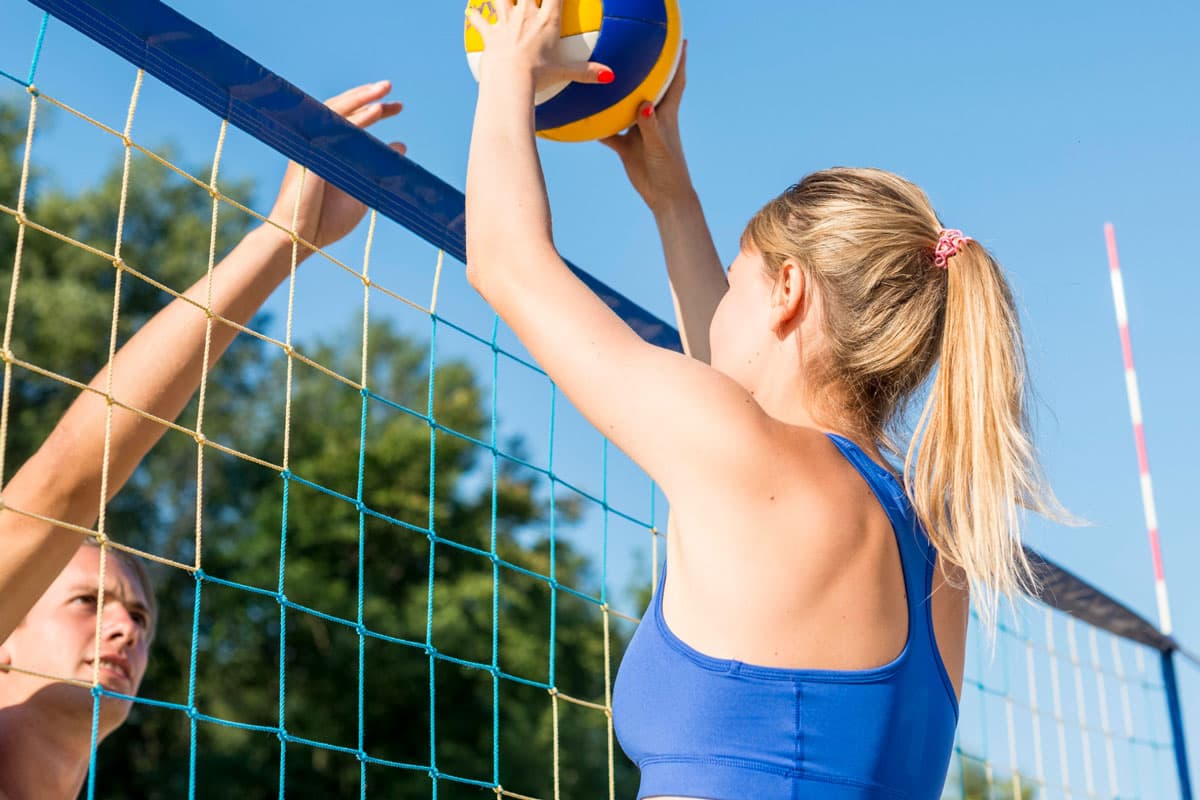
They share a name and a net, but beach volleyball and indoor volleyball are fundamentally different sports. The court, the team size, the surface, the strategy — everything changes when you move from hardwood to sand. If you are trying to decide which version to learn first, this breakdown will help you choose.
The Key Differences
Court Size
An indoor volleyball court measures 18 by 9 meters (roughly 59 by 30 feet). A beach court is smaller at 16 by 8 meters (about 52 by 26 feet). The reduced beach court size might sound easier, but with only two players covering it instead of six, each player is responsible for significantly more territory.
Team Size
Indoor volleyball features six players per side with specialized positions: setter, outside hitter, middle blocker, opposite hitter, libero, and defensive specialist. Beach volleyball strips it down to two players per side — period. No substitutions. No specialists. You do everything.
The Surface
This is the most obvious difference and arguably the most impactful. Sand absorbs energy from every step, making movement significantly more physically demanding. Jumping in sand requires 20 to 30% more effort than on a hard surface. Your legs will let you know the difference after your first beach session.
Rules Variations
Beach volleyball has no rotation system — with only two players, both play every position on every rally. Sets must be "clean" (no prolonged contact), which makes the overhead set much more strictly officiated on the beach. Tipping with an open hand is not allowed in beach volleyball; you must use a knuckle or a "cobra" hand shape.
Which Is Easier to Start?
Indoor volleyball has a gentler learning curve for most beginners. Here is why:
- More players on the court. With six people per side, each player covers less ground and has fewer responsibilities per rally.
- Specialized positions. You can focus on one role (like passing or hitting) without needing to master every skill immediately.
- Predictable surface. Hardwood is flat, consistent, and forgiving on your joints compared to sand.
- Lower physical barrier. Sand volleyball is exhausting. Moving, jumping, and diving in sand demands a baseline fitness level that indoor play does not require.
If you have never played volleyball at all, starting indoors allows you to learn fundamental skills — passing, setting, hitting, and serving — without the added challenge of fighting the sand on every play.
Which Builds Better All-Around Skills?
Beach volleyball, hands down. Because you only have one partner, you are forced to develop every skill in the sport. You must pass, set, hit, block, serve, and play defense — often within the same rally. There is no hiding behind a specialist teammate.
Many elite indoor players credit their beach volleyball experience with making them more complete athletes. The sand forces better body control, the reduced team size demands faster decision-making, and the outdoor elements (wind, sun, uneven sand) build adaptability that translates back to the indoor court.
Physical Demands: A Real Comparison
Both versions are athletically demanding, but in different ways:
- Beach volleyball emphasizes endurance, leg strength, and cardiovascular fitness. Playing in sand is a full-body workout that burns roughly 500 to 600 calories per hour.
- Indoor volleyball emphasizes explosive power, vertical jump height, and quick lateral movement. The hard surface allows for more dynamic, fast-twitch movements.
If you are using volleyball as a fitness tool, beach play provides a more comprehensive workout. If you are focused on explosive athleticism, indoor training will push those boundaries more effectively.
Gear Differences
Indoor volleyball requires proper court shoes with gum rubber soles, knee pads, and a regulation indoor ball (heavier, with a leather cover). Beach volleyball requires almost nothing — a swimsuit, sunscreen, sunglasses, and a beach volleyball (lighter, softer, slightly larger). Many players invest in sand socks for hot surfaces, but they are optional.
The gear cost barrier is lower for beach volleyball, making it more accessible from a financial standpoint.
Why Coaching Matters More in Beach Volleyball
In indoor volleyball, you can lean on your teammates. A weaker passer can be positioned strategically, and a strong setter can mask limitations elsewhere. In beach volleyball, there is nowhere to hide. With only two players on the court, every technical weakness is exposed on every single rally.
This is precisely why coaching is more impactful in beach volleyball. A coach can identify and correct the specific skills holding you back — whether it is your passing platform, your shot selection, or your positioning relative to your partner. Because you touch the ball more often in beach volleyball, improvements in technique translate immediately to better performance.
Indoor coaching is valuable too, but the specialized nature of indoor positions means your coach may focus on a narrow skill set. Beach coaching, by necessity, develops you as a complete player.
The Bottom Line
If you want the easiest entry point, start with indoor volleyball. The larger team, specialized positions, and forgiving surface make it more approachable for absolute beginners. If you want to become a complete volleyball player — or if you simply love the outdoors — beach volleyball will push you harder and make you better, faster.
Whichever version you choose, coaching accelerates the learning curve. And in beach volleyball especially, where there is no teammate to cover your gaps, working with a Coavora coach is the difference between stalling at a recreational level and developing into a competitive player. Find a volleyball coach near you, or check out what to expect at your first lesson.