The Beginner's Guide to Pickleball: Everything You Need to Know
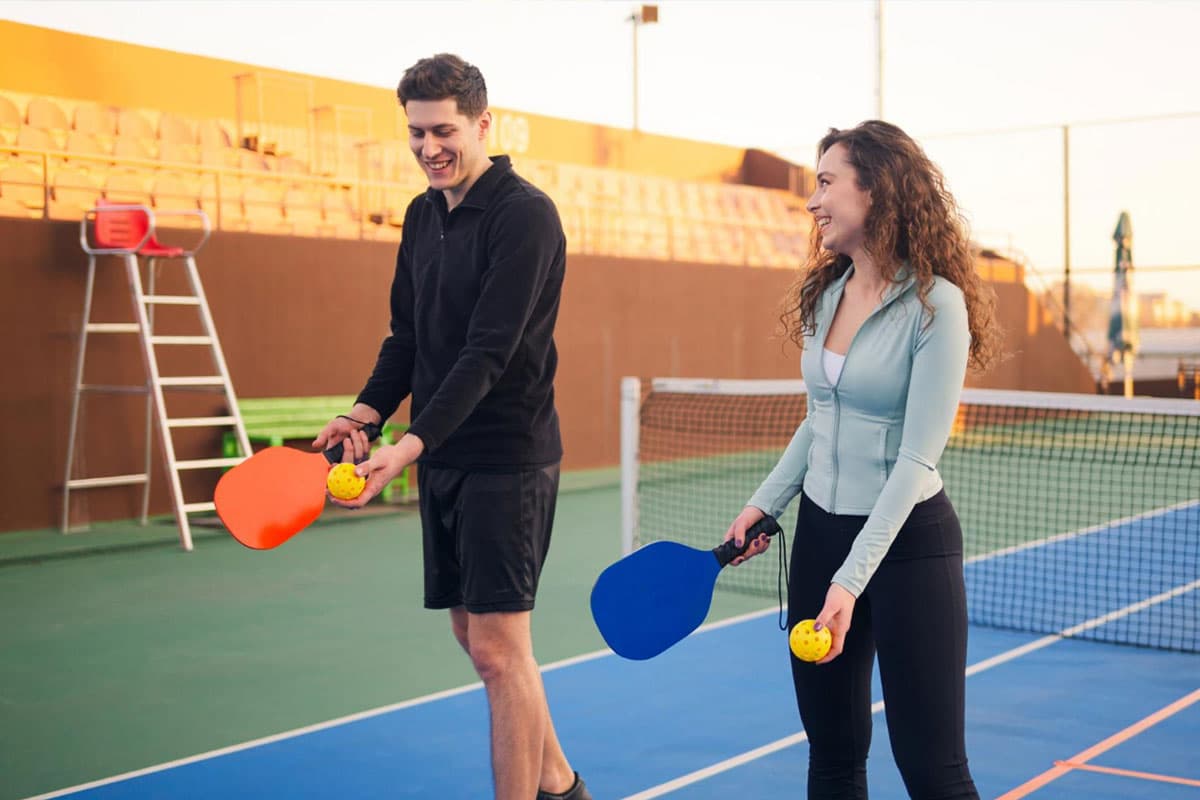
Pickleball has exploded from backyard curiosity to mainstream obsession in less than a decade. With over 36.5 million players in the United States alone, it is officially the fastest-growing sport in the country — and once you try it, you will understand why.
Part tennis, part badminton, part ping pong, pickleball is easy to learn, wildly social, and addictively competitive. Here is everything you need to know to get started.
What Exactly Is Pickleball?
Pickleball is a paddle sport played on a court roughly the size of a badminton court (20 feet wide by 44 feet long). Players use solid paddles — larger than ping pong paddles but smaller than tennis rackets — to hit a perforated polymer ball over a 34-inch net.
The sport can be played as singles or doubles, though doubles is far more common, especially at the recreational level. Games are typically played to 11 points, win by 2, and a full match rarely takes more than 20 minutes.
The Court: Smaller Than You Think
A standard pickleball court measures 20 by 44 feet — roughly a quarter the size of a tennis court. This compact playing surface is one of the reasons pickleball is so accessible: you cover less ground, rallies are faster, and the learning curve is gentler.
The most distinctive feature of the court is the kitchen — officially called the non-volley zone. This is a 7-foot area on each side of the net where you are not allowed to hit the ball out of the air (volley). The kitchen forces strategic play and prevents players from simply parking at the net and smashing everything.
Basic Rules You Need to Know
The Serve
Serves must be hit underhand, with the paddle contacting the ball below waist level. The serve is made diagonally cross-court and must clear the kitchen. Only the serving team can score points.
The Double Bounce Rule
After the serve, the receiving team must let the ball bounce once before returning it. Then the serving team must also let the return bounce once. After these two bounces, the ball can be hit out of the air (volleyed) or off the bounce. This rule prevents serve-and-volley dominance and creates longer, more strategic rallies.
Scoring
Games are played to 11 points, and you must win by 2. In doubles, the score is called with three numbers: the serving team's score, the receiving team's score, and which server is serving (1 or 2). It sounds confusing at first, but it becomes second nature after a few games.
Essential Gear: What You Actually Need
The Paddle
Paddles range from $30 for basic recreational models to $150 or more for advanced composite and carbon fiber options. For beginners, a mid-range paddle ($50 to $80) is the sweet spot. Look for a paddle that is lightweight (7.3 to 8.4 ounces) with a medium grip size. Avoid the cheapest wooden paddles — they are heavy and offer poor control.
The Ball
Outdoor balls have 40 smaller holes and are harder; indoor balls have 26 larger holes and are softer. Most recreational play uses outdoor balls. A pack of six costs around $10 to $15.
Shoes
Court shoes with lateral support are important. Running shoes are not ideal because they are designed for forward motion, not the side-to-side movement pickleball demands. Tennis shoes or dedicated pickleball shoes work best. Budget around $60 to $100 for a quality pair.
Why Is Pickleball So Popular?
The numbers tell the story: pickleball participation grew by 85.7% between 2021 and 2023. But statistics alone do not explain the obsession. Here is what actually drives it:
- Low barrier to entry. You can learn the basics in 15 minutes and play a real game on day one.
- Social by design. The smaller court means you are close to your opponents, chatting between points, and building community.
- All ages, all fitness levels. An 18-year-old and a 70-year-old can play a competitive game together — and both have fun.
- Quick games. A match takes 15 to 20 minutes, making it easy to fit into a lunch break or squeeze in before dinner.
When to Get a Coach vs. Learn on Your Own
You can absolutely learn the basics of pickleball on your own or with friends. The rules are simple, the strokes are intuitive, and YouTube tutorials can get you to a playable level quickly.
But there is a ceiling to self-taught play. Most recreational players hit a plateau around the 3.0 to 3.5 skill level. At that point, bad habits are ingrained, and improving requires someone who can see what you cannot. A coach identifies technical flaws in your serve, teaches you the soft game (dinks and drops), and introduces strategic concepts like stacking and resetting.
If you are serious about competing — or just tired of losing to the same people at your local courts — a few lessons with a Coavora-verified instructor can unlock the next level of your game. Browse pickleball coaches near you or read about how to choose the right coach.
The Bottom Line
Pickleball is the rare sport that is genuinely fun from the very first game. The rules are simple, the gear is affordable, and the community is welcoming. Start by showing up to your local courts with a paddle and a willingness to learn. And when you are ready to take your game from casual to competitive, a coach can get you there faster than you think.